Menu Explained
Every Pizza Crust Type, Explained (And Which One You Should Order)
Hand-tossed, thin, pan, stuffed, gluten-free. What each one actually is, how it changes the pizza, and when each is the right choice.

Marisol Vega
Founder & Lead Menu Analyst
Last updated
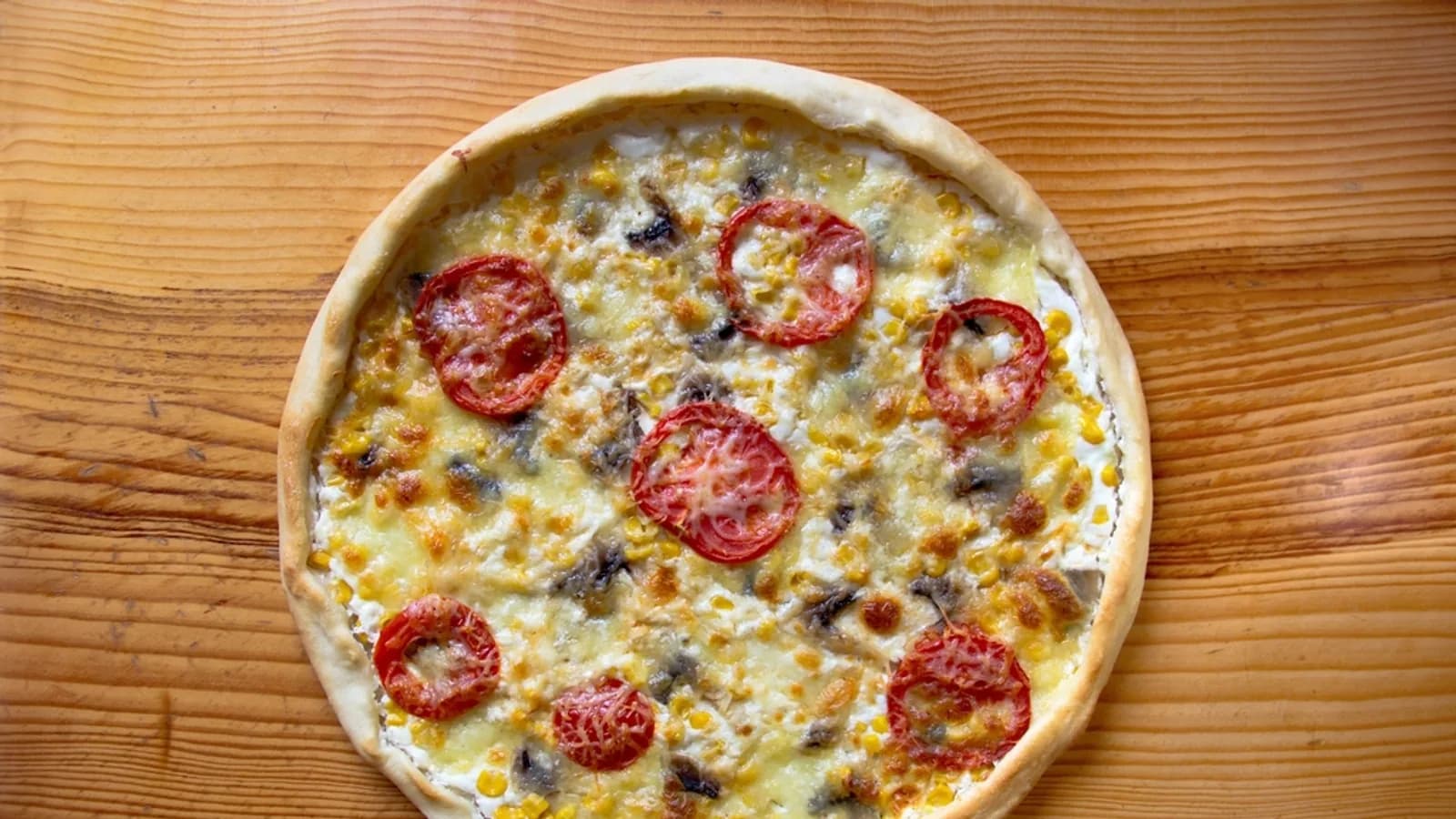
Crust is the decision that changes a pizza most, and it's the one people put the least thought into. Toppings get debated for five minutes; crust gets whatever's selected by default.
Which is odd, because the crust determines the texture, a large share of the calories, how well it survives delivery, and honestly, how much you enjoy the whole thing. Let's go through the options properly.
Hand-tossed
The default at most chains, and the one most people picture when they think of chain pizza. Dough is stretched by hand or machine to a moderate thickness, giving a base that's soft in the middle with a raised, chewy outer edge.
It's the safe choice for good reasons. It carries toppings well without collapsing, it survives a delivery drive better than anything else, and it strikes a balance between bread and topping that most people find comfortable.
Calorie-wise it sits in the middle of the range. A medium slice runs around 280 to 300 calories with a couple of toppings.
Order it when: you're getting delivery, you're feeding a mixed group, or you want the toppings and base to share the spotlight.
Thin crust
A completely different eating experience, and underrated. The dough is rolled flat and baked hot, producing a base that's crisp throughout rather than soft in the middle — cracker-like at the edges, with a distinct snap.
Because there's less bread, the toppings dominate. A pepperoni thin crust tastes considerably more of pepperoni than the same toppings on hand-tossed. If you're someone who picks toppings off and leaves crust behind, this is the crust for you.
It's also the lightest option by a clear margin — roughly a third fewer calories per slice than hand-tossed.
Order it when: you're doing carryout, you want the toppings forward, you're watching calories, or you're getting a vegetable-heavy pizza that would go soggy on a softer base.
Avoid it when: you're a long way from the store. Thin crust loses its defining quality in a delivery bag faster than anything else.
Pan crust
Dough proofed and baked in an oiled pan, which does two things at once: the base rises thick and bready, and the oil essentially fries the underside into a crisp golden layer. Done well, you get a genuine textural contrast — crunch underneath, soft and airy above.
It's heavy. This is the most filling crust on any menu, and the calorie count reflects it. Two slices of pan pizza is a real meal in a way that two slices of thin crust isn't.
Quality varies more with pan than with any other crust. It needs a proper proof and a proper bake, and a rushed store on a busy Friday can produce something dense and greasy.
Order it when: you want maximum comfort food, you're feeding people who want to feel full, or you're getting carryout from a store you trust.
Stuffed crust
Hand-tossed with a rope of mozzarella rolled into the outer edge. It exists to solve the crust-abandonment problem, and it works — the last two inches of each slice become the anticipated part.
The trade-offs are money and calories. It typically costs two to four dollars more than a standard base, it's excluded from many of the cheapest promotions, and it adds 60 to 90 calories per slice.
Ask for it well done. This is the single most useful request for stuffed crust — the extra oven time ensures the cheese inside actually melts fully rather than sitting semi-solid, which is the most common complaint.
Order it when: you're getting a simple pizza where the crust can be the star, and you're eating it fresh.
Avoid it when: leftovers are likely. The cheese sets firm on cooling and doesn't come back.
New York style
Where offered, this is a large, thin, foldable slice with a base that's crisp underneath but pliable enough to bend. It's the closest chain approximation to a proper slice-shop pizza, and it's usually only available on the largest size because the technique needs the diameter.
Order it when: you want big slices, you're feeding adults rather than children, and you like the fold.
Gluten-free crust
Made from a rice or corn flour blend. It's smaller than standard sizes, it costs more, and the texture is denser and more brittle than wheat dough. It's improved a lot over the past decade but nobody would mistake it for the real thing.
The critical point, and we want to be direct about this: a chain pizza kitchen is a shared environment. Wheat flour is airborne, surfaces are shared, and most operators explicitly state they cannot guarantee a gluten-free preparation. For coeliac disease, that warning is meaningful and should be taken at face value. For a preference or a mild sensitivity, it's a reasonable option.
The short version
Getting delivery, want the safe choice: hand-tossed. Picking it up, want the toppings forward or the lightest option: thin. Want to feel properly fed: pan. Want the crust to be the treat and you're eating it immediately: stuffed.
Whatever you pick, ask for it well done. Chain ovens run on timers calibrated for throughput, and almost every crust type benefits from an extra minute or two. It costs nothing and it's the single highest-value request you can make.
Example prices — verify at official checkout. Menu pricing is set independently by each franchise store and changes without notice.
Domino's Menu Guide is an independent publication. We are not affiliated with, endorsed by, sponsored by, or connected to Domino's Pizza LLC or any of its subsidiaries or franchisees. All trademarks and brand names belong to their respective owners and are referenced here only to describe the food being discussed.
Frequently asked questions
Keep reading
 Menu Explained
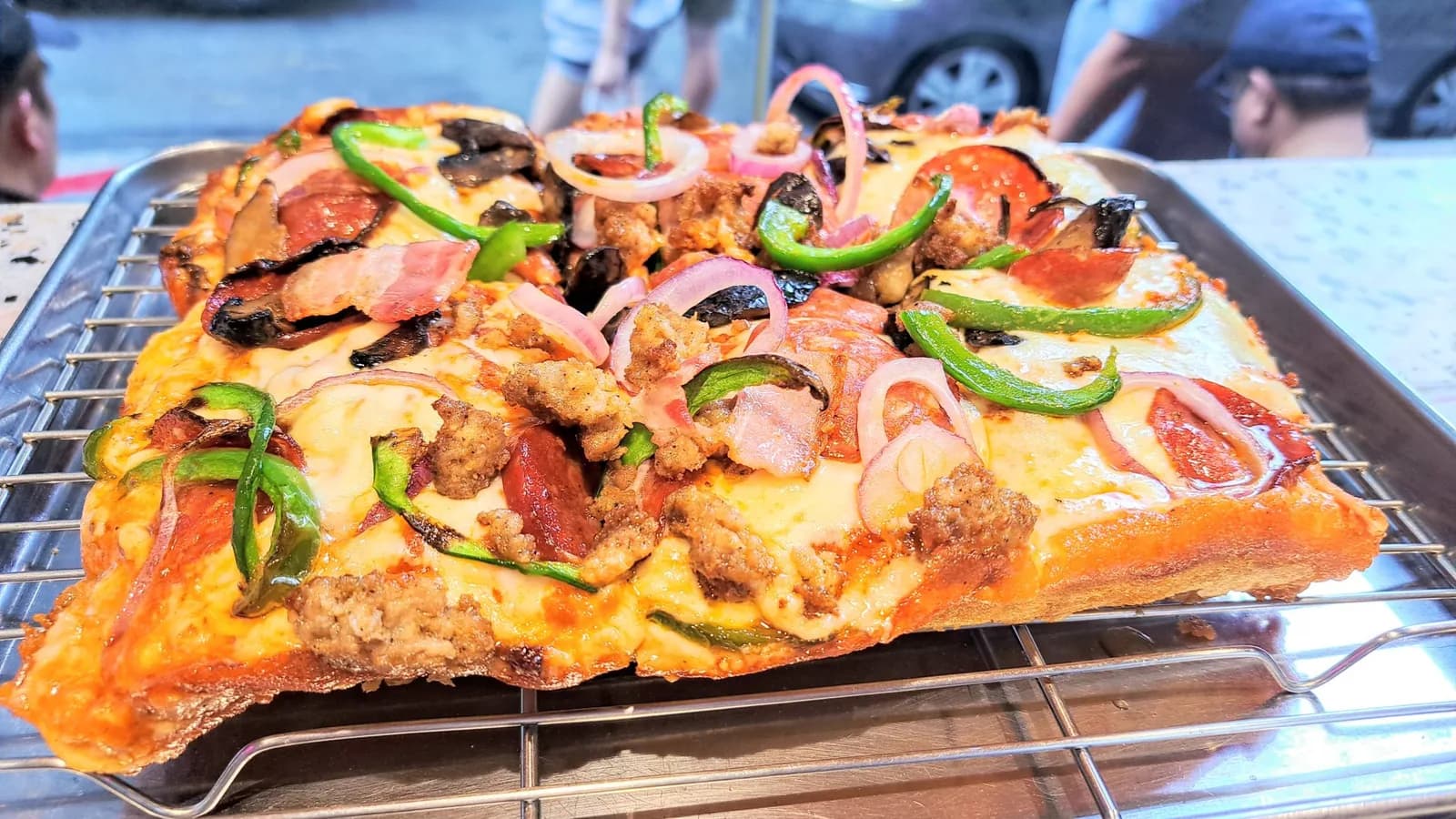
Pizza Toppings Ranked by Value, Not Popularity
Which toppings give you the most flavour per dollar, which ones ruin a crust, and which combinations actually work. A different way to look at the topping list.
 Money Saving
The 9 Best Value Items on Any Pizza Menu (And the 4 Worst)
Ranked by food per dollar and honest usefulness, not by what the marketing pushes. Some of these will surprise you.
 Comparisons
Thin Crust vs Hand Tossed: Which One Should You Actually Order?
Two crusts, completely different pizzas. A practical comparison across taste, calories, delivery survival, value and who each one suits.