Menu Explained
Pizza Toppings Ranked by Value, Not Popularity
Which toppings give you the most flavour per dollar, which ones ruin a crust, and which combinations actually work. A different way to look at the topping list.

Marisol Vega
Founder & Lead Menu Analyst
Last updated
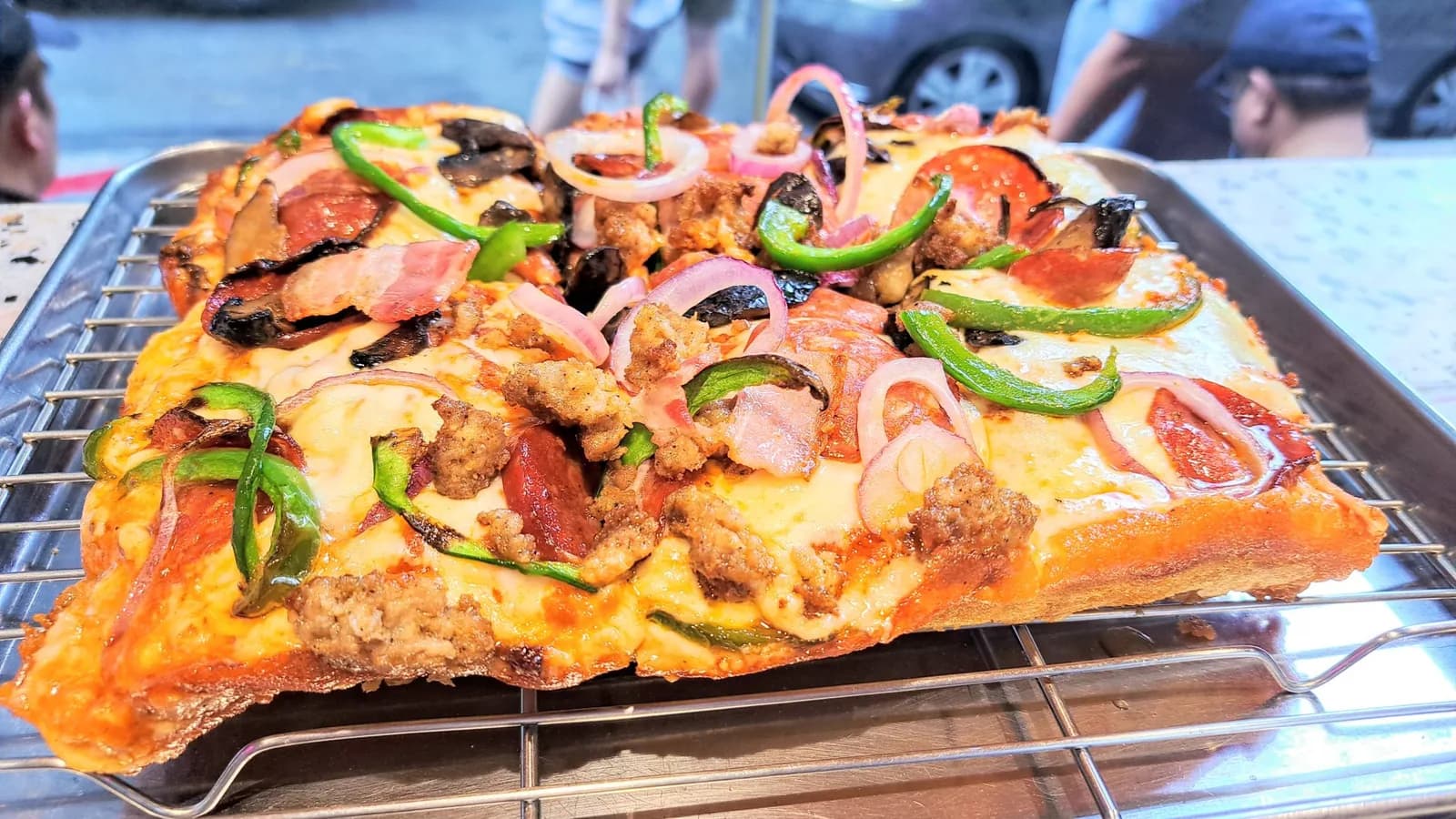
Topping lists are usually organised by category — meats, vegetables, cheeses. Useless organisation, really. What you want to know is which ones earn their place.
So here's a different cut at it: toppings ranked by how much they contribute relative to what they cost you and what they do to the pizza structurally.
Tier one: earn their place every time
Pepperoni. The most efficient topping in existence. It's inexpensive, it renders fat that seasons the cheese around it, the edges crisp into cups, and it delivers salt, spice and texture from one ingredient. Nothing else does as much work.
Mushrooms. The best vegetable topping by some distance. They bring genuine savoury depth — the closest thing to an umami boost on a standard list — and they cook down without flooding the base. They also pair with almost everything.
Red onion. Underrated and cheap. Onions sweeten as they cook and add a sharpness that cuts through cheese. On a rich pizza they're the ingredient stopping it becoming monotonous.
Italian sausage. More interesting than pepperoni, though it costs more. Fennel and coarse texture give it character, and it distributes in chunks rather than slices, which changes how each bite reads.
Tier two: good, situational
Green peppers. Hold their texture, add a vegetal bite, don't release much water. Reliable rather than exciting.
Black olives. Brine and salt. A small amount does a lot; a heavy hand overwhelms. Good on vegetable pizzas where something salty is missing.
Bacon. Smoky and crisp, but it's usually applied as small crumbles that scatter, so the flavour is less concentrated than you'd expect. Better as a supporting ingredient than a headline.
Jalapeños. Excellent value for what they do. Vinegar and heat cut through fat more effectively than almost anything else, which makes them a good corrective on cheese-heavy pizzas.
Grilled chicken. Mild, lean and a bit characterless on its own, but it works as a protein base for sauce-forward pizzas — buffalo, barbecue, garlic. Rarely worth it on a standard tomato base.
Tier three: think carefully
Fresh tomato. Tastes good, releases a lot of water. On hand-tossed with a well-done bake it's fine. On thin crust it's a problem.
Spinach. Same issue, worse. Fresh spinach collapses into wet strands. Where it works is under cheese rather than on top, and not every kitchen builds it that way.
Pineapple. Leave the argument aside — structurally it's a high-moisture topping that also brings sugar, which browns fast. If you want it, ask for well done and pair it with something salty.
Ham. Mild to the point of near-invisibility on a pizza with anything else on it. Fine on its own, lost in company.
Extra cheese. Not really a topping, but it's on the list. It adds richness and calories in roughly equal measure, and it mutes everything underneath it. Worth it on a plain pizza, questionable on a loaded one.
Combinations that genuinely work
A few pairings that punch above their weight:
Pepperoni and jalapeño. Fat and heat. The classic corrective combination and it costs almost nothing.
Mushroom and onion. Two vegetables doing different jobs — depth and sweetness. Better than either alone, and it makes a vegetarian pizza taste substantial.
Sausage and green pepper. Fennel against vegetal bite. A traditional pairing that's traditional for a reason.
Bacon and pineapple. Say what you like about it. Salt and sweet is a functioning flavour principle and this is the pizza version.
Mushroom, onion and pepperoni. If we had to pick one three-topping order to eat repeatedly, this is it. Savoury, sweet, spicy, and structurally sound on any crust.
The three-topping rule
Beyond three toppings, things start to blur. Individual flavours merge into a generic savoury character, and structurally the base begins to struggle — particularly on thin crust.
There's also a cost argument. Most promotional structures include two toppings, with additions charged per item. Going from two to five toppings can add three or four dollars to a deal pizza, which meaningfully erodes the discount you were getting.
If you want a genuinely loaded pizza, look for a flat-rate "any toppings" offer rather than paying per-topping on a two-topping deal. That's what those offers are for, and it's the only situation where five toppings makes economic sense.
Example prices — verify at official checkout. Menu pricing is set independently by each franchise store and changes without notice.
Domino's Menu Guide is an independent publication. We are not affiliated with, endorsed by, sponsored by, or connected to Domino's Pizza LLC or any of its subsidiaries or franchisees. All trademarks and brand names belong to their respective owners and are referenced here only to describe the food being discussed.
Frequently asked questions
Keep reading
 Money Saving
The 9 Best Value Items on Any Pizza Menu (And the 4 Worst)
Ranked by food per dollar and honest usefulness, not by what the marketing pushes. Some of these will surprise you.
 Menu Explained
Every Pizza Crust Type, Explained (And Which One You Should Order)
Hand-tossed, thin, pan, stuffed, gluten-free. What each one actually is, how it changes the pizza, and when each is the right choice.
 Comparisons
App vs Website vs Phone: Which Way of Ordering Pizza Wins?
Three ways to place the same order, three different prices and three different failure modes. Here's which one to use and when.